

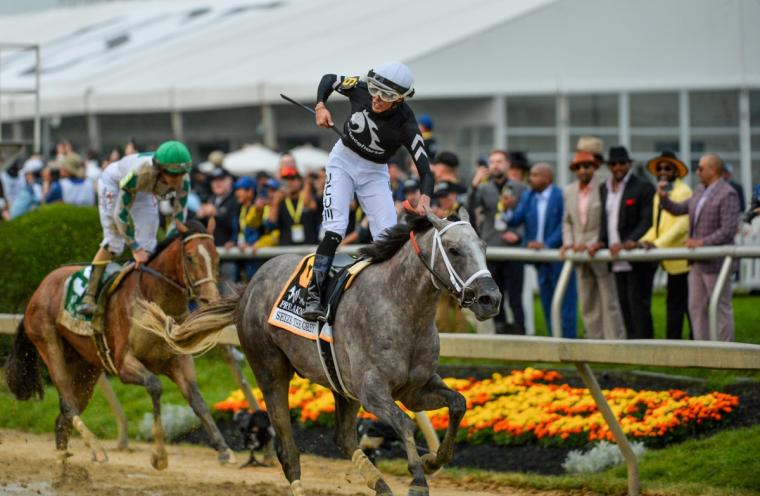
Photo © Tavan Smith | Dreamstime.com
As Pimlico Race Course undergoes a long-needed rebuild, the eyes of the thoroughbred racing world are turning to Laurel Park, where this year’s Preakness Stakes will be hosted.
If you missed the first reel, here’s the rundown. Maryland’s Pimlico Race Course, at 156 years old, was badly dilapidated. Many structures were no longer up to code (in fact, all the way back in 2019, a 7,000-seat area of the grandstand was closed because of safety concerns), elevators were broken, the ceilings leaked — and at the end of the day, there’s only so much a fresh coat of paint can do each spring.
Since hosting its last Preakness in 2025, Pimlico, according to the Baltimore Sun, “resembles a moonscape, its grandstand, clubhouse, paddock and barns having been razed to make way for a new Pimlico. The Preakness is being held this year at Laurel Park while Pimlico is under construction.”
But not all racetracks are created equal and hosting at Laurel, as opposed to Pimlico, means the race will look considerably different this year.
Size: Laurel Race Track is far smaller than Pimlico. As a result, attendance will be capped at 4,800, as opposed to Pimlico’s 63,000 last year — although it is essential to note that 63,000 was considered sparse; there have been years where attendance has exceeded 110,000.
For comparison purposes, last year's Kentucky Derby attracted 147,406 people; attendance at the Belmont Stakes (which was capped) stood at 46,243.

Reputation: Barstool Sports noted that over the years, participants in the Kentucky Derby (including some winners) have not taken part in the Preakness out of owners’ desires not to overwork their horses. That led to the Preakness sometimes feeling like less of a must-do and more of an option.
Already, Cherie DeVaux, trainer of Derby winner Golden Tempo, has announced her horse won't make the trip to Maryland.
The Preakness still has its attractions for racegoers, if not for horses, adds Barstool Sports: “What the Preakness lacks in Prestige, though, it makes up for with Party. The infield at Pimlico might have been the biggest party in horse racing.”
The infield at Pimlico has long been a notorious bacchanal, with individuals hauling in coolers of alcohol and engaging in all kinds of shenanigans. (Check out the photos here, including The Running of the Port-a-Potties.)
A rule against BYOB in 2009 and an upgrade in the entertainment at the infield calmed things down somewhat but the area was still widely acknowledged as a party zone.
Laurel, however, won’t be hosting any infield activity. At all. Period. A note on the Preakness website FAQ section states, “Due to the venue configuration at Laurel Park, Infield tickets will not be available for Preakness 151.”
Pricing: Ticket prices are higher than previous years — a lot higher.
Barstool Sports was (of course) indignant.
“Look, the Preakness at Pimlico felt like The People's Triple Crown Race; this one at Laurel looks like a much fancier (more fancy?) day at the races. DRF.com reported tickets will range from $246 (!) for general admission for the two days (you have to buy both days) to $1,698 (!!) for the Turfside Terrace. A total of just 1,000 general admission tickets will be made available to the public. That stinks. There will also be luxury suite experiences, but we don't have prices for them yet. Spoiler - it won't be cheap.”
1/ST Racing and Gaming, the company responsible for putting on the race, has been kept busy responding to complaints about the cost.
“We are committed to providing Preakness 151 guests with a thoughtfully planned experience and will make investments into the event that takes into consideration Laurel Park’s footprint, capacity and available amenities,” 1/ST told DRF.
But the Preakness isn't the only Triple Crown race that has moved. Belmont Park, located on Long Island, is undergoing its own $455 million improvement. The Belmont Stakes moved to Saratoga Race Course for a three-year term (2024, 2025 and 2026) and will return to Belmont Park for 2027.
In many ways, Laurel provides an excellent stopgap for the race and does, in fact, have some advantages over Pimlico.
Parking: Whereas Pimlico had extremely limited parking, Laurel offers onsite parking directly adjacent to the grandstand.
Accessibility: Laurel has wheelchair-accessible entrances, elevators to main floors and designated handicap parking near the clubhouse entrance. The facility also offers comprehensive services, including accessible seating in multiple areas.
Economic Impact Information: So far, there have been no qualified statements about the expected economic impact of the Preakness this year, as opposed to previous years, although economist Anirban Basu told reporters at the Baltimore Sun that the city will take an economic hit “in the tens of millions of dollars” on lost visitor spending.
“This is the most democratic of the Triple Crown jewels in that everyone’s welcome,” he said. “It’s the people’s race, and that’s how you maximize economic impact.”
Additionally, the article noted, "With Pimlico out of commission this year, Baltimore will also lose out on proceeds from a 10 percent admissions and amusements tax on Preakness tickets collected by the state comptroller’s office and returned to the city, according to two racing officials who spoke on condition of anonymity because they were not official spokespersons."
The most recent Preakness economic studies, which date back eight years, place the race’s impact at between $30 million and $40 million. Those studies assumed Preakness attendance of more than 130,000, although it’s not known if the new Pimlico would hold anywhere near that number even if temporary seating were to be used.
Maryland Governor Wes Moore was quoted as saying that the new track will support more than 500 jobs and become the “centerpiece” of a state thoroughbred racing industry that sustains more than 28,000 jobs and helps drive the state’s economy.
Despite the venue change, there’s simply no doubt that people will attend, wagers will be placed, food will be sold and of course, thousands of Black-Eyed Susans (the Preakness cocktail of choice) will be purchased and swilled, all contributing to the bottom line over the course of two days.
But in the Thoroughbred Daily News, an article entitled, “The 4,800 Preakness Cap is Low. Should Expectations Be Even Lower?” brings up a valid concern:

“It looks like we'll have to leave room in the record books to see whether the 2026 Preakness attendance cap of 4,800 needs to have its own unique chapter written up in better-than-expected terms, or if the idea fizzles to the point where it's just a footnote describing a dubious move at a precarious time for the Preakness.”
The race is expected to return to Pimlico in 2027, even if construction is not fully finished, says PressBoxOnline:
“Capacity is still undetermined. The new clubhouse won’t be completed, and again, overlay [sturdy temporary hospitality accommodations for watching the race as well as providing food and beverage] will be part of accommodating onsite spectators. Quite likely there will be seating and food and beverage in the Pimlico infield and perhaps outside the rail, if that’s at all possible given the construction.”
“The 2026 Preakness will be sort of a 'new' Preakness,” concluded Barstool Sports. “I already miss the old one. Maybe we won't get back to co-eds trying to navigate dozens of Toilet Tops, but hopefully it's closer to that than to some VIP-only event when it returns to Pimlico next spring.”
About the Author